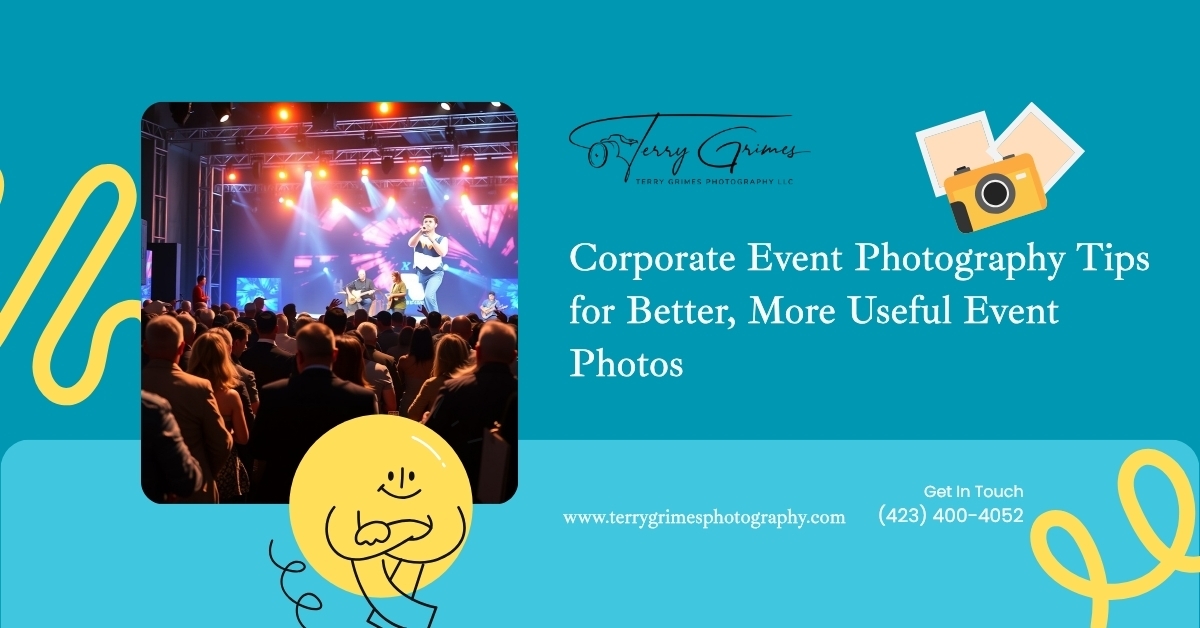
Corporate events have a lot of moving parts. People arrive at different times, speakers follow a schedule, and important moments can happen quickly. Good photography helps document those moments clearly and gives your business useful images after the event.
For companies looking for Event Photography in Rossville, GA, a little planning before the event can make the photo coverage smoother. It also helps the final gallery feel more organized and useful.
Whether you are planning a networking event, conference, or award ceremony, these corporate event photography tips will help you prepare.
Whether you are planning a business event, private gathering, or community function, a few simple steps can make the photo coverage smoother. These tips help you prepare better and get event photos that feel clear, natural, and useful.
Before the event, think about how your business will use the photos.
Some companies need images for social media. Others need them for a website recap, email newsletter, sponsor update, press release, or internal communication. The purpose matters because it affects what should be photographed.
For example, a networking event may need more candid photos of people talking and interacting. A conference may need speaker photos, audience shots, sponsor tables, and wide room images. An awards event may need clear photos of recipients, leadership, and group moments.
When the purpose is clear, the photographer can focus on the right details.
Send the photographer a basic schedule before the event day.
It does not need to be overly detailed. A simple timeline with the main moments is usually enough.
Include details such as:
This helps the photographer know where to be and when to be ready.
It also helps avoid missed moments. Some important parts of an event are not obvious to someone outside the company. If a short announcement, sponsor mention, or team recognition matters, add it to the schedule.
A shot list helps the photographer understand what matters most. It should not be too long or too rigid.
Think of it as a priority list, not a script.
Your shot list may include:
A clear shot list helps the photographer cover the important parts of the event without making the coverage feel staged.
It is also helpful to point out people who may not be easy to identify. If the photographer does not know your leadership team, sponsors, or special guests, share names or have someone available to identify them.
Group photos are easier when they are planned before the event gets too busy.
Waiting until the end can be difficult. Some guests may leave early. Others may be in conversations. Speakers or executives may have other commitments.
Try to schedule group photos during a natural break or before the main event begins.
For example, you may want to photograph:
If certain people need to be in the same photo, assign someone from your team to help gather them. This keeps the process quick and avoids confusion.
Before guests arrive, take a few minutes to look at the areas that will be photographed.
Small details can affect the final images. Loose papers, bags, boxes, cups, cords, or extra chairs can make important areas look cluttered.
Pay attention to:
The space does not need to look perfect. It just needs to look clean and prepared.
This is especially important if the photos will be used on your website, social media, or future event promotions.
Lighting has a direct effect on event photos.
Some rooms look fine in person but are difficult to photograph. Dim ballrooms, dark corners, colored uplighting, and harsh overhead lights can affect how people look in photos.
Before the event begins, check the main areas where photos will happen.
Ask:
If the venue is dark, the photographer may need to use flash. That is common for indoor corporate events. It is better to discuss this before guests arrive, especially if there are speeches, awards, or stage moments.
If your company wants branded photos, place signs and displays where people naturally gather.
A banner in the corner may not appear in many photos. Signage near registration, the stage, or a networking area is usually more useful.
You may want to include:
Branding should be visible, but it should not overpower the event. The most useful photos often show people interacting naturally while the brand is present in the background.
Choose one person to help the photographer during the event.
This person does not need to manage every photo. They just need to be available for quick questions.
They can help identify:
This keeps the photographer from having to guess. It also helps the event stay on track.
A main contact is especially useful for larger corporate events, conferences, and business gatherings where the photographer may not know everyone in the room.
Candid photos are useful because they show the event as it happened.
These may include people talking, listening, laughing, networking, asking questions, or interacting with displays.
Good candid photos do not need to feel dramatic. They just need to feel natural and relevant to the event.
Examples include:
These photos can work well for social media, recap posts, newsletters, and future event promotions.
The room is usually cleanest before the event starts.
This is a good time to photograph the setup and smaller details.
Useful detail photos may include:
These photos help tell the full story of the event. They also give your business more image options after the event.
Once guests arrive, the room changes quickly. Bags, cups, jackets, and movement can make clean detail photos harder to capture.
If there are guests, areas, or materials that should not be photographed, tell the photographer before the event starts.
This may include:
Clear instructions help avoid issues later.
This is especially important for corporate events where some information may be internal or confidential.
Before the event, ask how and when the photos will be delivered.
Clarify:
This is helpful if your business wants to post soon after the event.
For example, you may need a few images for LinkedIn, a thank-you post, a sponsor update, or an internal announcement. If quick delivery matters, discuss that before the event day.
Most event photography issues can be avoided with simple planning.
Here are a few common mistakes:
If the photographer does not know when important moments are happening, they may miss something important.
Group photos become harder later in the event. People leave, move around, or become difficult to gather.
If sponsors are part of the event, make sure their displays, representatives, and interactions are included in the shot list.
The photographer may not know who the executives, speakers, or VIP guests are. Make sure someone can point them out.
Poor lighting can affect the final images. Check the main photo areas before the event begins.
Podiums, registration tables, and sponsor displays should be kept clean when possible.
A photographer can work more efficiently when one person is available to answer questions.
Use this checklist before your next event.
A corporate event photographer is useful when the event represents your business, team, sponsors, or community presence.
This may include:
If the photos will be used for marketing, documentation, internal communication, or public updates, professional coverage can help your business get more value from the event.
For companies searching for Event Photography in Rossville, GA, it helps to work with a photographer who understands both the event schedule and the business purpose behind the photos.
Corporate event photography works best when there is a clear plan.
The photographer should know the schedule, key people, important moments, branding details, and delivery needs. These details help create a gallery that is organized and useful without making the event feel interrupted. If your business is planning an event in Rossville, Chattanooga, or the surrounding North Georgia area, Terry Grimes Photography LLC can provide professional event photography for company events, networking events, conferences, and business gatherings.
